-
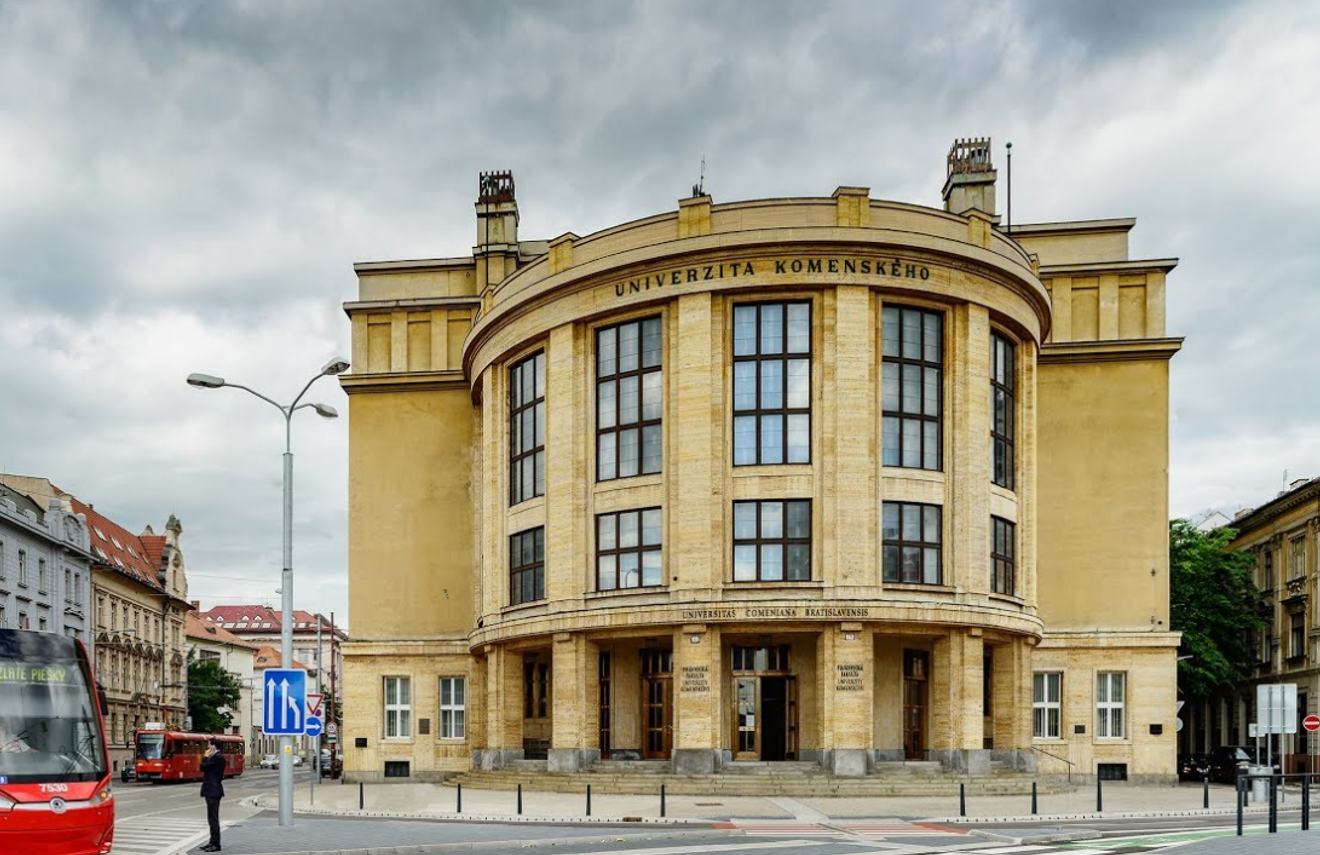 Financial Innovation, Risk Governance, and the Dynamics
of Global Capital FlowsBRATISLAVA, SLOVAKIA JUNE 8, 2026
Financial Innovation, Risk Governance, and the Dynamics of Global Capital Flows
Date:
June 8th, 2026 (UTC+2)
Organizer
Faculty of Social and Economic Sciences, Comenius University in Bratislava
Symposium Chair
Dr. Lukas Vartiak
Associate Professor at Comenius University
Personal Bio
Dr. Lukas Vartiak is an Associate Professor at the Faculty of Social and Economic Sciences of the Comenius University in Bratislava, Slovakia. Since his doctoral studies, he has been devoted to socially responsible business, business ethics, Business Excellence, and Business English, all of which are closely related to ethics and philosophy.
Call for Papers
Background:Recent waves of financial innovation have significantly transformed global financial markets and cross-border capital movements. The rapid expansion of fintech, digital assets, new financial instruments, and data-driven financial services has increased the speed, scale, and complexity of international capital flows. At the same time, these developments have raised important questions about financial stability, systemic risk, and the effectiveness of existing risk governance frameworks. Capital flows today react swiftly to changes in global financial conditions, regulatory environments, and technological shifts, often amplifying volatility and spillover effects across regions. Against this backdrop, policymakers, regulators, academics, and practitioners face growing challenges in understanding how innovation reshapes risk transmission and how governance mechanisms can adapt in an increasingly interconnected and technology-driven global financial system. Goal/Rationale:The goal of this workshop is to provide a forum for discussion and exchange on the evolving relationship between financial innovation, risk governance, and global capital flows. Rather than focusing on a single methodological approach, the workshop aims to bring together diverse perspectives from academia, policy institutions, and financial practice. Participants will explore how innovative financial structures and technologies affect risk perception, capital allocation, and cross-border financial stability, and how regulatory and governance frameworks can respond effectively to these changes. The workshop seeks to encourage dialogue on the opportunities and challenges created by financial innovation, including regulatory coordination, systemic resilience, and the unintended consequences of rapid technological adoption. By fostering interdisciplinary discussion and knowledge sharing, the workshop aims to identify emerging risks, highlight best governance practices, and stimulate future collaborative research and policy initiatives. |
Scope and Information for Participants:
The workshop invites contributions in the form of research presentations, policy discussions, and practitioner insights related to financial innovation and global capital dynamics. Topics of interest include, but are not limited to: fintech and digital finance in cross-border capital flows; innovation-induced financial volatility; risk governance and regulatory adaptation; global and regional perspectives on capital flow management; systemic risk and financial interconnectedness; and the implications of innovation for emerging and developing economies. Both conceptual and applied contributions are welcome. The workshop is designed to be interactive, encouraging discussion among participants from different backgrounds. Early-stage research, policy-oriented analyses, and experience-based contributions are particularly encouraged.
Topics
The main topics of this symposium are listed below.
Finance
- Business Intelligence
- Business Information Systems
- Corporate Finance and Governance
- Digital Financial Intermediation
- Finance & Investment
- Financial Risks and Capital Flows
- Global Business
- International Finance
- Prices, Business Fluctuations, and Cycles
Management
- Advertising
- Business Performance Management
- Decision Sciences
- Development Planning and Policy
- Entrepreneurship
- Human Resource
- Information Systems
- Information Technology Management
- Labor Relations & Human Resource Management
- Management Information Systems
- Operations Research
- Organizational Behavior & Theory
- Production/Operations Management
- Public Administration and Small Business Entrepreneurship
- Public Relations
- Public Responsibility and Ethics
- Strategic Management
- Systems Thinking
- Time Management
- Total Quality Management
Business
- Business analysis
- Techniques, Methodologies, and Models
- Enterprise and Company Analysis
- Requirements Planning and Management
- Requirements Analysis and Documentation
- Strategic Analysis and Design
- Innovating
- Vendor and Tools Track
- Data Modeling
- Business Process Modeling
- Soft Skills and Competencies
- Architectural Frameworks
- Business Rules
- Object-oriented Analysis
- Structured Analysis
Meanwhile, submissions aligned with the overall conference theme are also welcome.
Economics
- Economic Development
- Comparative Economic Systems
- Consumer Behavior
- Economic Systems
- Financial Economics
- Household Behavior and Family Economics
- Industrial and Manufacturing
- International Economics
- Labor Economics
- Law and Economics
- Market Structure and Pricing
- Marketing Research and Strategy
- Public Choice
- Productivity and Economic Growth
- Regulatory Economics
- Travel/Transportation/Tourism
- Welfare Economics
Submission
Prospective authors are kindly invited to submit full papers that include title, abstract, introduction, tables, figures, conclusion and references. It is unnecessary to submit an abstract in advance. The deadline for general submission is June 1, 2026.
Each paper should be no less than 4 pages. One regular registration can cover a paper of 6 pages, and additional pages will be charged. Please format your paper well according to the conference template below before submission. Paper Template Download
Please prepare your paper in both .doc/.docx and .pdf format and submit your full paper by email with both formats attached directly to sympo_bratislava@icmred.org
Important Dates:
Submission & Payment
|
Fees
|
Publication
Accepted papers will be published in Advances in Economics, Management and Political Sciences (AEMPS) (Print ISSN: 2754-1169) and will be submitted to Conference Proceedings Citation Index (CPCI), Crossref, CNKI, Portico, Google Scholar and other databases for indexing. The situation may be affected by factors among databases like processing time, workflow, policy, etc.
Proceeding Title: Advances in Economics Management and Political Sciences (AEMPS)
Press: EWA Publishing, United Kingdom
ISSN: 2754-1169 2754-1177 (electronic)
* The papers will be exported to production and publication on a regular basis. Early-registered papers are expected to be published online earlier.
This symposium is organized by ICMRED 2026 and it will independently proceed the submission and publication process
Venue:
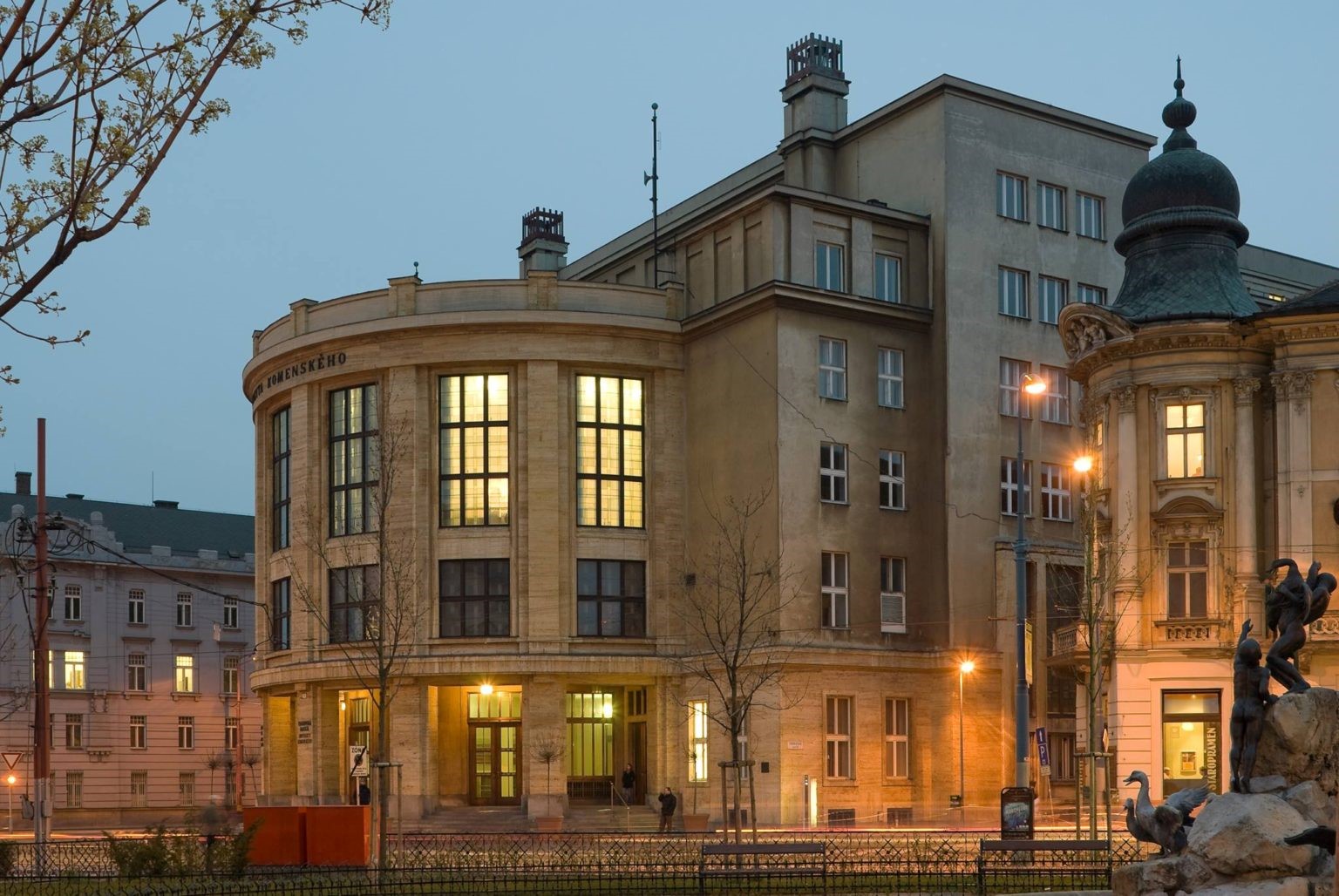
Faculty of Social and Economic Sciences, Comenius University in Bratislava, Mlynske luhy 4, 821 05 Bratislava, Slovakia
How to Participate:
Attend in person
If you want to attend the symposium on-site, please email sympo_bratislava@icmred.org. The symposium seats are limited. Both contributors and non-contributors who wish to participate in the symposium in person need to apply to the symposium organizers.
VISA:
Visa for foreigners to enter the Slovak Republic
In order to ensure the information is correct and up to date, there may be changes which we are not aware of. And different countries have different rules for the visa application. It is always a good idea to check the latest regulations in your country. This page just gives some general information of the visa application.
Where can I apply for a visa?
If your travel destination is one Schengen Member State, you should lodge the application at the diplomatic mission of that Member State. If your travel destination includes more than one Member State, the application should be lodged at the diplomatic mission of the Member State of the main destination. The main destination is understood to be the destination where the applicant intends to spend the longest time or where the main purpose of the intended journey is carried out. If no main destination can be determined, you should lodge your visa application at the diplomatic mission of the Member State whose external border you intend to cross first.
The list of diplomatic missions of the Slovak RepublicThe Schengen visa application shall be lodged at the territorially competent Slovak
diplomatic mission. If the foreigner is residing in the third country (other than the
country of his nationality), s/he may submit his/her visa application at the diplomatic
mission territorially competent for the country of his current residence. Any exemption
from
the rule shall be profoundly justified by the applicant and is subject to approval of
the
diplomatic mission.
Apart from the possibility to apply for a visa directly at the
diplomatic mission, there is a possibility to lodge the Schengen visa application in the
visa centre, as long as the Slovak Republic is cooperating with an external service
provider
in the country of your residence.
What type of visa do I need?
The type of visa you need depends on the length and purpose of your visit. The visa can be issued for one, two or multiple entries. A decision on the validity of visa, length of stay and number of entries is made by the diplomatic mission in line with the Schengen rules.
Airport transit visa (A)
Attend in person:
You can usually stay in the international transit area at the airport without a visa, while waiting for a connecting flight. However, some nationals or categories are required to have a valid visa, even if they do not leave the international transit area. An airport transit visa authorizes the holder to transit solely through the airport's international transit area.
Uniform Schengen visa (C)
In general, the Member States issue uniform Schengen visas valid at the territory of all
Member States. The uniform Schengen visa entitles its holder to enter and stay in the
Schengen area for a duration of no more than 90 days in any 180-day period, which
entails
considering the 180-day period preceding each day of stay. The Schengen visa may be
issued
with maximum validity of 5 years.
In certain cases a territorial validity of a visa
may
be limited to the territory of the Member State which has issued the visa or to the
territory of some but not all Member States. Information on the territorial validity is
indicated on the visa.
National (long-stay) visa (D)
National (long-stay) visa may be issued for stays of duration of more than 90 days. A third country national may be granted a national visa, if
a) it is necessary in relation with the granting of a residence permit in the Slovak Republic;
b) the applicant is older than 15 years and is accepted for language education at a language school in the extent of not less than 25 lessons per week;
c) it is necessary in order to fulfil the obligations of the Slovak Republic following from international treaties;
d) it is in the interest of the Slovak Republic;
e) the applicant is a family member of a foreigner who was granted asylum or subsidiary protection.
The national visa entitles its holder to reside in the Slovak Republic for the duration of its validity but also in other Member States for a period not exceeding 90 days in any 180-day period. The national visa may be issued with maximum validity of 1 year.
Please note that if the length of stay of a foreigner in the Slovak Republic exceeds 90 days the foreigner shall apply for a residence permit or a national visa (if the criteria for the granting of the national visa are met).
Further information on conditions for the issuance of national visasWhich document should I submit with a visa application?
In general, when lodging the application the applicant is required to:
1) present a completed application form
2) present a valid travel document
3)
present
a full-face colour photo, conform to ICAO standards
4) allow the collection of his
fingerprints
5) provide supporting documents indicating the purpose and conditions
of
the journey
6) where applicable, provide proof of possession of adequate and valid
travel medical insurance
NOTICE:
Should your application be denied, the organizing committee cannot change the decision of visa officer, nor will ICMRED engage in discussion or correspondence with the visa application center on behalf of the applicant. The registration fee CANNOT be refunded when the VISA application of individual being denied.